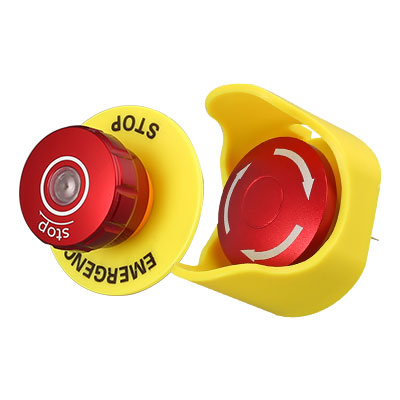


How to Choose the Right Push Button Switch for Panel Thickness | HBAN Push button
Choosing the correct push button switch is not only about voltage, current rating, or whether it is momentary or latching. One of the most common and costly mistakes customers make is selecting the wrong thread length for their panel thickness.
As a professional push button switch manufacturer, we frequently receive messages like:
"The thread is too short and the nut cannot be tightened."
This article will help you fully understand how to select the correct push button switch according to your panel structure and avoid installation failures.
1. Why Panel Thickness Matters More Than You Think
The mounting method of most metal push button switches relies on threaded housing and a locking nut. If the threaded portion is shorter than the total installation depth, the switch simply cannot be secured.
- Using thick aluminum or stainless steel panels
- Installing on reinforced industrial control cabinets
- Adding waterproof sealing washers
- Mounting on wooden or composite structures
2. Step One: Accurately Measure Panel Thickness
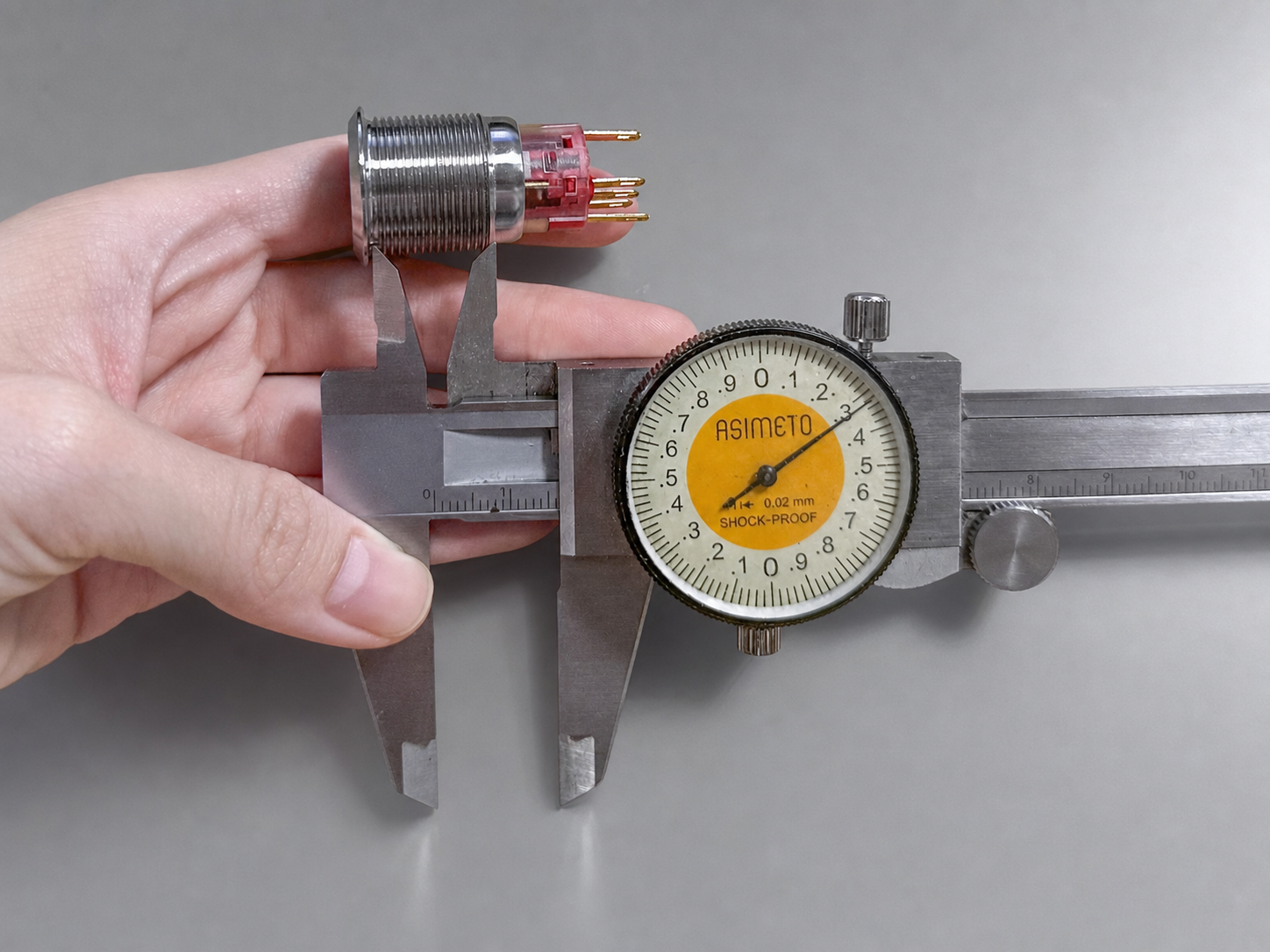
Always use a caliper to measure the actual panel thickness.
| Panel Type | Typical Thickness | Industry Example |
|---|---|---|
| Thin sheet metal | 0.8 – 2 mm | Small control boxes |
| Standard equipment panel | 2 – 5 mm | Machinery interface panels |
| Plastic housing | 3 – 6 mm | Consumer devices |
| Reinforced industrial panel | 6 – 10 mm | Heavy equipment cabinets |
| Wood or structural board | 8 mm+ | Custom installations |
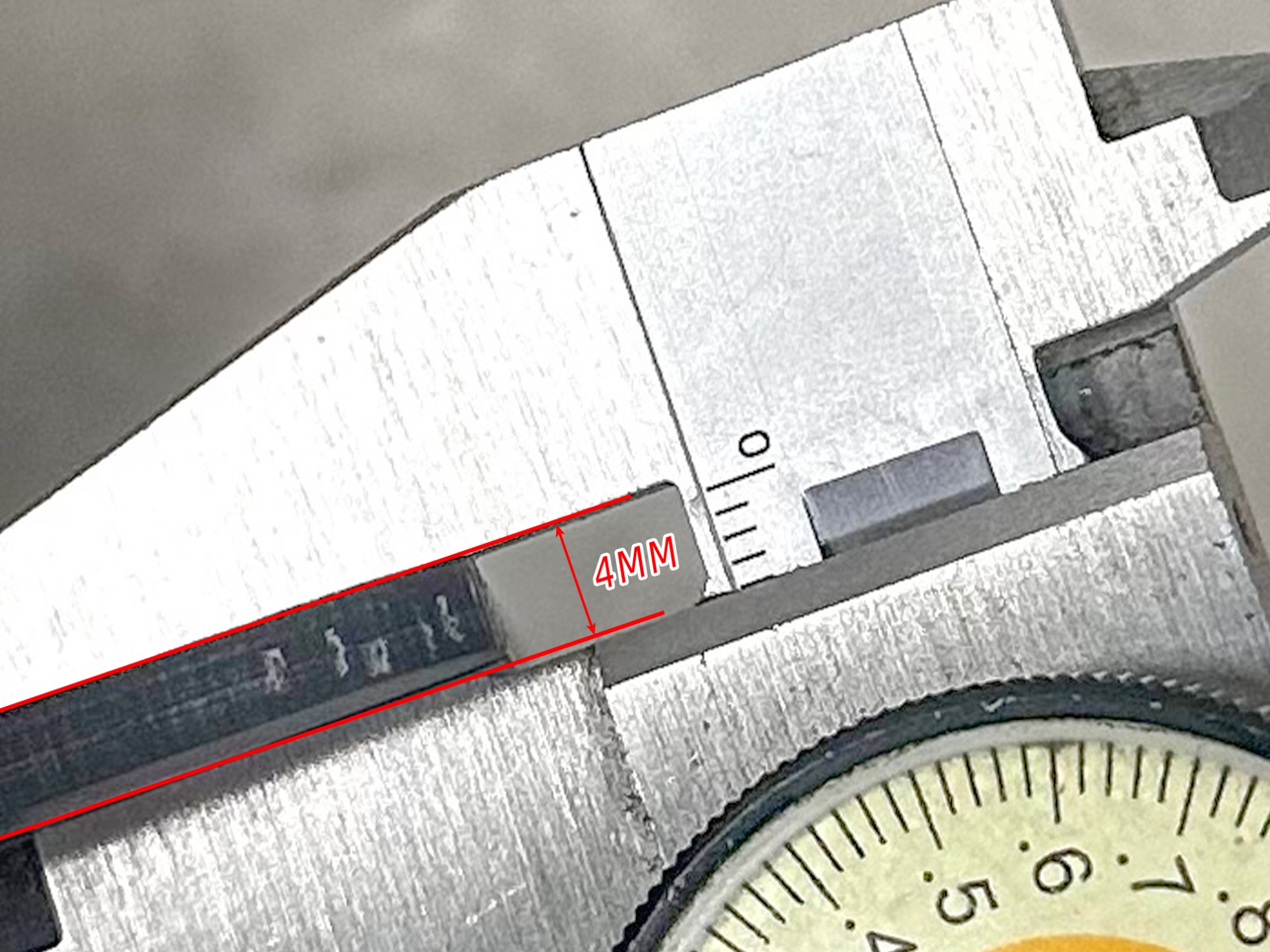
3. Understanding Thread Length
The thread length refers to the usable threaded section of the switch housing.
- The nut cannot engage properly
- The switch will remain loose
- Mechanical vibration may cause failure
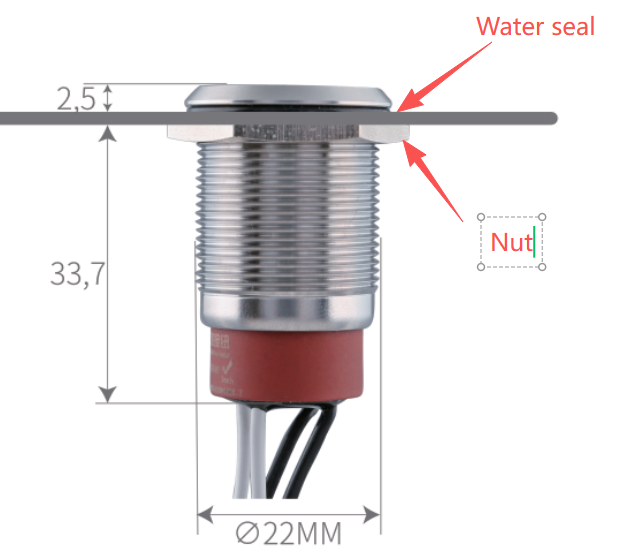
4. How to Calculate Required Thread Length?
Example Calculation
Panel thickness: 8 mm
Waterproof washer: 1 mm
Safety margin(Prevent the nut from failing to install.): 2 mm
Total required thread length = 11 mm
In this case, a 12 mm thread version is recommended.
5. Recommended Thread Length Guide
| Panel Thickness | Recommended Thread Length | Suggestion |
|---|---|---|
| 1 – 3 mm | 5 mm | Standard short thread |
| 3 – 5 mm | 8 mm | Medium thread |
| 5 – 8 mm | 10 – 12 mm | Long thread |
| 8 – 12 mm | 12 – 16 mm | Extra long thread |
| >12 mm | Custom solution | Contact manufacturer |
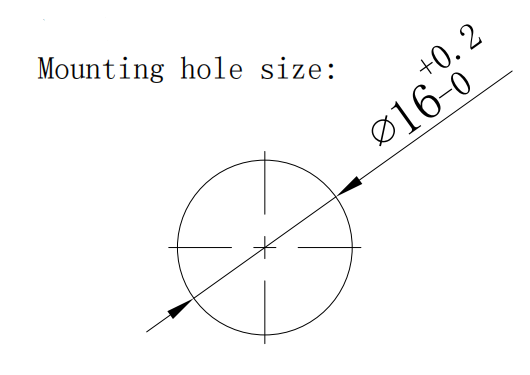
6. Mounting Hole Diameter Must Match
Even with correct thread length, incorrect mounting hole size will cause issues.
- 16mm push button switch → 16mm mounting hole
- 19mm pushbutton switch → 19mm mounting hole
- 22mm switch button→ 22mm mounting hole
Too large → unstable installation.
Too small → cannot insert switch.
7. Waterproof Considerations (IP65 / IP67)
Outdoor or industrial applications require waterproof switches.
However, remember:
- Sealing rings occupy installation depth
- Rubber washers compress under pressure
- Metal flat washers increase total thickness
This must be included in thread length calculation.
8. Common Customer Mistakes
❌ Ignoring panel reinforcement ribs
❌ Forgetting gasket thickness
❌ Assuming all 19mm switches have same thread length
❌ Failed to consult the manufacturer regarding suitability before placing a bulk order.
9. Professional Manufacturer Advice
Before placing a bulk order, always confirm:
- Panel thickness
- Hole diameter
- Thread length version
- Waterproof requirement
- Terminal type (solder, screw, pin)
- Operating type (momentary or latching)
Frequently Asked Questions
How do I know if the push button thread length is long enough?
Measure panel thickness and add washer thickness plus 1–2 mm safety margin.
What happens if the thread length is shorter than the panel thickness?
The nut cannot be tightened and installation will fail.
Do waterproof push buttons require longer threads?
Yes. Sealing rings increase installation thickness.
Are all 19mm switches the same thread length?
No. Always verify manufacturer specifications.
Need Engineering Support?
If you are unsure which push button switch fits your panel, send us:
- Your panel thickness
- Mounting hole size
- Voltage & current rating
- Waterproof requirement
- Application description
Our engineering team will recommend the most suitable model and prevent installation problems before production.
Contact Our Engineering Team What is ISO 13850?| HBAN Push button
 How to Choose IP65, IP67 & IP69K?| HBAN Push button
 Industrial Push Button IEC 60947-5-1 vs IEC 60947-5-5 | HBAN Push button
 What Is a Laser Engraved Push Button Switch? | HBAN Push button